A gravel drive with a kerb edge
A gravel drive stays where it is put only when its edges are held. A kerb at the road end takes the push of the stone and of a car turning in, and fabric under the stone keeps it from sinking into the soil below. This guide works one drive of 6.0 by 2.6 metres, from the edges down to the stone, and sets out the order for an ME7 plot.
Lakeside Builders Merchants is the Gillingham and Hempstead delivery site of Discount Builders Merchants (KENT) LTD, the builders' merchant at Lower Road, Northfleet, DA11 9BB. There is one yard, and orders are placed on www.discountbm.co.uk.

Measuring and fixing the edges
Measure the drive as a rectangle first, then take off any corner a wall or a bed cuts away. A drive 6.0 metres long and 2.6 metres wide is 15.6 square metres. Fix the line with pegs and string, and check the falls: the drive should drop a few centimetres from the house toward the road, so that water runs off the stone.
A drive like this has three edges to hold. The house side is a wall and needs nothing. The lawn side takes flat top edging along its full length. The road end takes kerbs, with their tops just above the finished stone so the gravel stays in.
Digging out and the base
Dig out about 150 mm for the base and the stone, taking out the topsoil and any roots first. Lay geotextile over the bottom of the dig and turn it up the sides, so the type 1 stays put on soft ground instead of sinking into the subsoil.
Build the type 1 up in lifts of about 75 mm, and compact each one fully before the next is added. A drive takes a car's weight over one spot, so a soft patch in the base shows up as a rut after the first wet week. Roll the finished base twice and check it with a straight edge.
Kerbs, fabric and the top layer
Set the kerbs on a bed of mortar or on a narrow strip of concrete before any stone goes in, so the gravel is held against them rather than piled over them. Check each kerb with a level along its top, and keep the tops at the height the finished gravel will reach, or a little above it.
Spread shingle over the fabric to a depth of about 40 mm and rake it level. Use a rounded size rather than a fine one, because fine gravel is pushed out by the tyres and blown onto the lawn. A 40 mm layer over 15.6 square metres is about 0.62 cubic metres, which weighs roughly a tonne.
Edging the lawn side
Flat top edging holds the stone in along the lawn and keeps the edge straight. Fix it into the base before the shingle goes on, not after. Stone washed under an edge that was fixed late leaves the line wavy, and the mower then rides up onto the top of it.
Count edging by the metre of lawn it holds, not by the length of the drive. Each length is 914 mm, so seven lengths lay 6.4 metres for a 6.0 metre side, with the last one cut back to fit.
Keeping the drive in shape
Rake the shingle every few months, and top up the wheel tracks where the stone has thinned. A drive this size loses a little stone each winter to the lawn and the drain, and a few spare bags kept under cover save a second order in spring.
Ask for the bulk bags to be set down at the road end if the lorry can reach it, or at the gate if it cannot. A bag of stone is heavy to carry across a lawn, so decide the drop before the day and clear the way to it.
Rules of thumb
| Drive area | Length times width, less any corner cut away. 6.0 by 2.6 metres is 15.6 square metres. |
|---|---|
| Type 1 base | 100 mm deep. Area times 0.1 gives cubic metres, and each cubic metre is about 2 tonnes once rolled. |
| Shingle top | 40 mm over the area. 15.6 square metres at 40 mm is about 0.62 cubic metres, or roughly a tonne. |
| Edging | One 914 mm length for each 0.9 metre of lawn edge, plus a cut length to finish the run. |
| Kerbs | Along the road end, one kerb for each metre of width, plus a little over for the ends. |
| Geotextile | The area plus a margin turned up the sides, which one roll covers for a drive this size. |
The shop has calculators that turn a measurement into a quantity.
On the shop today
The products this guide talks about, from the shop's Garden & Landscaping aisle. Prices last checked .
-
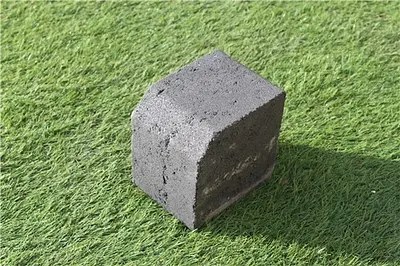 Small Kerbs Charcoal
each
£1.91 inc VAT
£1.59 ex VAT
In the yard
-
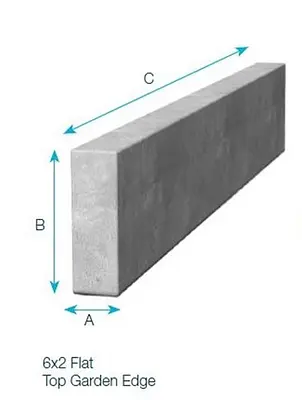 Flat Top Edging 150x50x914mm
each
£5.06 inc VAT
£4.22 ex VAT
In the yard
-
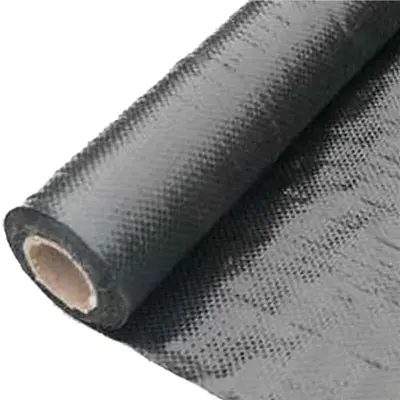 4.5m x 100m Geotextile Woven (black)
each
£180.00 inc VAT
£150.00 ex VAT
In the yard
-
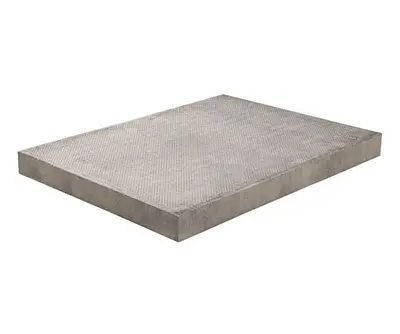 Council Slabs Grey 900x600x50mm
each
£11.63 inc VAT
£9.69 ex VAT
In the yard
-
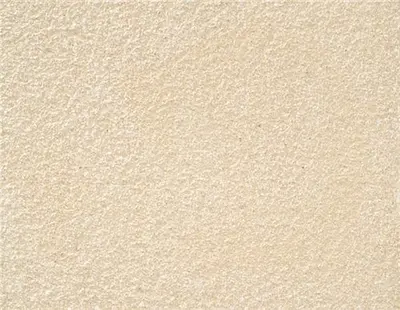 Textured Slabs 450x450 Buff
each
£10.20 inc VAT
£8.50 ex VAT
In the yard
-
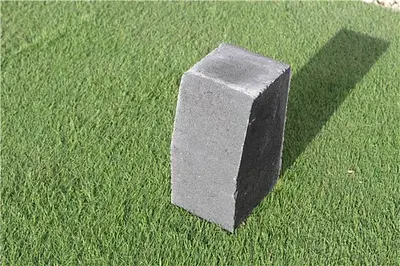 High Kerbs Charcoal
each
£2.50 inc VAT
£2.08 ex VAT
In the yard
-
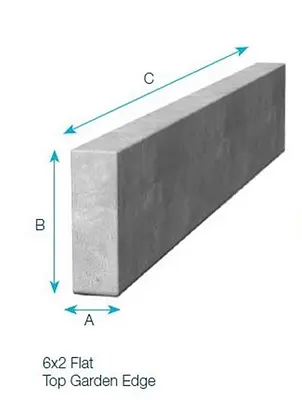 Flat Top Edging 200x50x914mm
each
£7.74 inc VAT
£6.45 ex VAT
In the yard
-
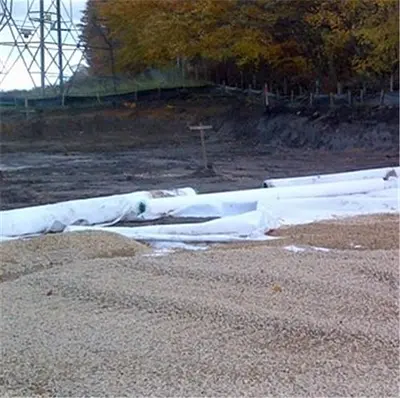 Ekotex 06 4.5m x 100m Geotextile Non Woven (white)
each
£240.00 inc VAT
£200.00 ex VAT
In the yard
Prices are the shop's prices today. Stock and ordering are on www.discountbm.co.uk.
Kerbs, edging and fabric for ME7 drives See all Garden & Landscaping on the shop
Delivery to Gillingham and Hempstead
- ME7
-
Free when the goods reach £41.66 ex VAT (£49.99 inc VAT).
A smaller order pays the difference up to that amount: goods of £25.00 ex VAT (£30.00 inc VAT) pay £16.66 ex VAT (£19.99 inc VAT) for delivery.
More guides for Gillingham and Hempstead
- A side gate between two posts in ME7 Hanging a side gate in a Gillingham or Hempstead passage: the gate posts, two panels, slotted posts and post mix, counted through to a worked order.
- A concrete base for a shed in Hempstead A 2.6 by 2.0 metre concrete base for a garden shed in Hempstead: type 1, ballast, sharp sand and cement counted by the cubic metre, with a worked order.
- Floor joists for a garden room in ME7 Bearers, joists and chipboard for a 3.0 by 2.4 metre garden room floor on pads in Gillingham and Hempstead, counted board by board, with an order.