A side gate between two posts in ME7
Narrow side passages rarely take a lorry, so the boundary along one is usually a short run with a gate in it, carried in piece by piece and set by hand. The gate, its two posts and the panels beside it are counted together as one run. This guide follows a passage of about three and a half metres from the gate posts through to the order.
Lakeside Builders Merchants is the Gillingham and Hempstead delivery site of Discount Builders Merchants (KENT) LTD, the builders' merchant at Lower Road, Northfleet, DA11 9BB. There is one yard, and orders are placed on www.discountbm.co.uk.

Measuring the opening
Measure from the face of the house, or from the end of the existing fence, to the far side of the opening. A vertical gate hangs between two posts, so the gap between them is the gate's width plus a few millimetres for the hinges and the latch. A gate that is short by a few centimetres is the commonest fault on a passage, and it is cheapest to catch with the tape.
Check where the boundary runs before anything is set. A gate that opens onto a neighbour's drive or a shared path needs their agreement, and the title plan shows the line. Stretch a string along the line and put a peg at every post position, then take each measurement from the string rather than from the old fence, which may have crept out of true.
Gate posts and the panels
The gate hangs from a mortice post on the hinge side and latches to a post on the other. The hinge post carries the weight of the gate every time it swings, so it is set to the same depth as the other posts, and its hinge side is checked for plumb before the gate is hung. A mortice post suits a gate because the hinges are fixed into it, which a slotted post cannot take.
Panels run from the gate post to the far end of the passage, with a slotted post at each join. A waney lap panel is the lighter choice and suits a passage with a little shelter. The slots hold the panel edges, so one broken panel lifts out and a new one drops in without moving the posts. Two panels need just one slotted post between them and a second at the far end.
Setting the posts in post mix
Each post goes into a hole dug to the depth it needs and is filled with post mix. The mix is poured dry around the post and wetted in the hole, so it sets against the timber without a separate mixing step. Brace each post with a stake and check it is plumb in two directions before the mix begins to set.
Expect rubble in a passage. Old footings, broken brick and building waste often lie a spade's depth down where a boundary was built, and a post that strikes them has to be moved or the hole widened. Say on the order that the passage is rubble-filled, so the bags are counted for the depth that is really needed.
Counting the run
Add the gate's width to the panels and the posts. A passage with one gate and two panels takes two mortice posts at the gate and two slotted posts, one at the join and one at the far end, which makes four posts in all. The panels are cut to the gap that is left, so the last one is usually a part panel.
Count post mix by the post, not by the metre. One bag a post is the usual count in firm clay, and two bags for a post set in soft or wet ground. Store the bags under cover until they are needed, because a bag that gets wet sets solid in its packet before the post goes in.
Carrying the parts down the passage
Everything for a passage gate is carried by hand from the road, so the lorry stops at the front and the parts go down the side one at a time. Panels are the awkward piece and need two people. A single gate is light enough for one person once the posts are standing.
On the order, give the narrowest width of the passage and say whether a bin, a meter box or a gas bottle has to be moved first. Those details decide how many trips the carry takes, and they help the yard more than the postcode alone.
Rules of thumb
| Gate posts | Two mortice posts, one at each side of the gate, set to the same depth as the rest of the run. |
|---|---|
| Slotted posts | One for each join between panels, plus one at the far end of the run. |
| Panels | The length left after the gate, divided by the panel width, rounded up. The last panel is cut to fit. |
| Post mix | One 20 kg bag for each post in firm ground, and two for a post in soft or wet ground. |
| Gate | One vertical gate for the opening, sized to the gap between its two posts. |
The shop has calculators that turn a measurement into a quantity.
Worked order: A 3.6 metre passage, not counting the gate
| Product | Quantity | What it is for | Cost |
|---|---|---|---|
| 6'x6' Waney Lap Panel | 2 at £25.00 | The 2.6 metres left after the gate takes two panels, the second cut to 0.77 metres. | £50.00 |
| 2.7mtr Slotted Concrete Post (9') | 2 at £25.50 | One slotted post at the join and one at the far end. Each is 2.7 metres, which leaves about 0.7 metres in the ground. | £51.00 |
| Postmix / Postcrete approx. 20kg | 5 at £4.16 | One 20 kg bag for each post set in the run, and one spare for a hole that needs a second bag. | £20.80 |
| Goods | £121.80 | ||
| Delivery to ME7 | £0.00 | ||
| Delivered total ex VAT | £121.80 | ||
| Delivered total inc VAT | £146.16 | ||
Not in this order: Not in this order: the gate and its two mortice posts, which the yard prices separately. The latch and hinges, the gravel board along the foot, any capping along the top, and the rubble taken away once the posts are in.
The quantities are a starting point for a job of this size. Put the same goods in a basket on www.discountbm.co.uk with your own postcode to see the figure for your order, or send the yard your list.
On the shop today
The products this guide talks about, from the shop's Fencing Supplies aisle. Prices last checked .
-
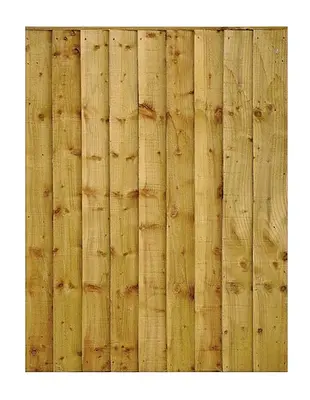 Gate vertical board 910x1830
each
£59.40 inc VAT
£49.50 ex VAT
In the yard
-
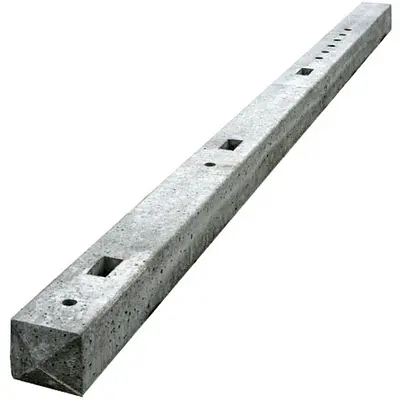 2.4mtr Mortice Concrete Post
each
£42.00 inc VAT
£35.00 ex VAT
In the yard
-
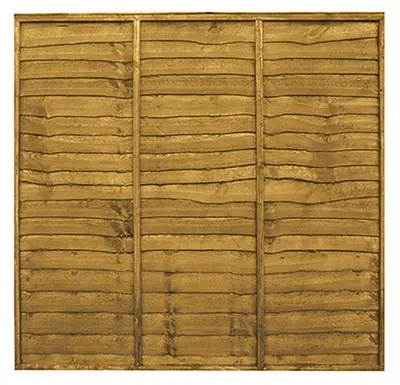 6'x6' Waney Lap Panel
each
£30.00 inc VAT
£25.00 ex VAT
In the yard
-
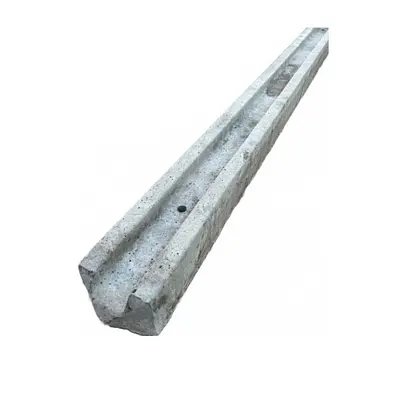 2.7mtr Slotted Concrete Post (9')
each
£30.60 inc VAT
£25.50 ex VAT
In the yard
-
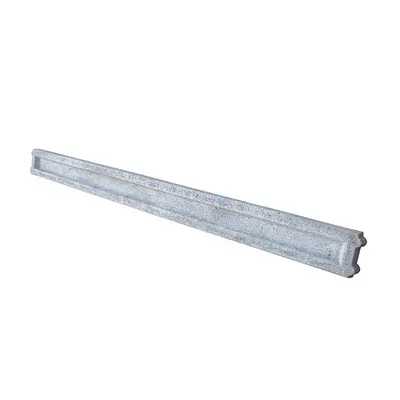 1830x50x150mm (6") ** Light Weight** Recessed Concrete Gravel Board
each
£15.00 inc VAT
£12.50 ex VAT
In the yard
-
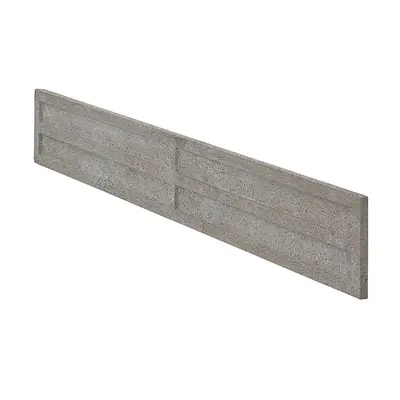 1830x50x300mm (12") ** Light Weight ** Recessed Concrete Gravel Board
each
£24.00 inc VAT
£20.00 ex VAT
In the yard
Prices are the shop's prices today. Stock and ordering are on www.discountbm.co.uk.
Panels, posts and gates for Hempstead gardens See all Fencing Supplies on the shop
Delivery to Gillingham and Hempstead
- ME7
-
Free when the goods reach £41.66 ex VAT (£49.99 inc VAT).
A smaller order pays the difference up to that amount: goods of £25.00 ex VAT (£30.00 inc VAT) pay £16.66 ex VAT (£19.99 inc VAT) for delivery.
More guides for Gillingham and Hempstead
- A concrete base for a shed in Hempstead A 2.6 by 2.0 metre concrete base for a garden shed in Hempstead: type 1, ballast, sharp sand and cement counted by the cubic metre, with a worked order.
- Floor joists for a garden room in ME7 Bearers, joists and chipboard for a 3.0 by 2.4 metre garden room floor on pads in Gillingham and Hempstead, counted board by board, with an order.
- A gravel drive with a kerb edge A 6.0 by 2.6 metre gravel drive on an ME7 plot: the type 1 base, geotextile, shingle top, kerbs and edging, with a worked order from Northfleet.